




Home/销售与招募Sales & Recruiting/见面与展示Meeting & Presenting

团队建设 · 内部培训 · 21 页幻灯片Team Building · Internal training · 21 slides

见面与展示:先赢得信任

Meeting & Presenting: Earn the Trust First

销售三部曲的第一部,不讲成交技巧,只讲见面之前和见面当下的专业: 约在哪里、到客户家注意什么、坐哪个位置、用幻灯片还是手写稿、手机里的资料怎么管、每个月的目标怎么定。

Part one of a three-part sales series. No closing techniques here, only the professionalism before and during the meeting: where to meet, what to watch at a client's home, where to sit, slides or handwriting, how to keep your materials on your phone, and how to set monthly targets.

幻灯片 · 21 页 · 每页下方附详细讲解Slides · 21 pages · full presenter notes under each ↓ 跳到全文↓ Skip to the full article

见面与展示Meeting & Presenting

销售三部曲 · 第一部:建立专业形象与客户信任Sales series, part one: a professional image and the client's trust

客户不信任你,再好的技巧都没用;客户信任你,笨拙的技巧照样能成交Without trust, the best technique fails; with it, even clumsy technique works

Presented by Team Rise

各位好,我们是 Team Rise。今天开始讲销售三部曲。第一部,也就是今天这一堂,不讲任何销售技巧。 所有的技巧,开场怎么问、异议怎么处理、怎么促成,都放在第二部讲。

Hello everyone, we're Team Rise. Today we begin a three-part sales series. Part one, today's session, covers no sales techniques at all. Every technique, how to open, handle objections and close, belongs to part two.

那第一部讲什么?讲两件事:专业形象和客户信任。为什么先讲这个? 请记住封面最下面这一句:客户不信任你,你再好的技巧都没用;客户信任你,你笨拙的技巧照样能成交。

So what is part one about? Two things: a professional image and the client's trust. Why start there? Remember the line at the bottom of this cover: if the client doesn't trust you, the best technique in the world won't help; if they do, even clumsy technique gets the deal done.

信任不是在你讲产品的那一刻建立的,是从你约在哪里见、几点到、车停在哪、进门第一句话、坐在哪个位置开始, 一点一点累积起来的。今天讲的全是这些细节,每一个都来自实战。

Trust isn't built the moment you start on the product. It accumulates from where you meet, when you arrive, where you park, your first words at the door, and where you sit. Today is all about those details, and every one of them comes from the field.

节奏提示Pacing

开场直接说明「今天不讲技巧」,大家会好奇;后面每一个细节最好配一个真实的小故事,比讲道理有用。

Say up front that there are no techniques today; it makes people curious. Pair each detail with a short real story; that works better than explaining principles.

信任从八件事开始Trust Starts with Eight Things

MAP

从见面之前,到见面当下,再到每个月的目标From before the meeting, to the meeting itself, to your monthly targets

1专业形象Image
2销售工具Tools
3客户预约Booking
4见面地点Location
5见面礼仪Etiquette
6专业展示Presenting
7资料系统Materials
8目标管理Goals

前七件让客户愿意相信你,第八件让你每个月都有足够的人可见The first seven make clients willing to trust you; the eighth makes sure you have enough people to meet every month

今天一共讲八件事,按实际发生的顺序排。

We'll cover eight things today, in the order they actually happen.

前三件发生在见面之前:专业形象,客户还没见到你,就已经在通过你的朋友圈、你的穿着打扮判断你了; 销售工具,出门之前包里该带什么;客户预约,约的时候就把时间、地点、谁来说清楚。

The first three happen before you meet. Your image: before a client ever sees you, they're judging you by your social feed and how you dress. Your tools: what goes in your bag before you leave. Booking: settling the time, place and who's coming when you set it up.

中间三件发生在见面当下:见面地点,约在哪里,去客户家要注意什么;见面礼仪, 前 30 秒、座位、手机、距离、时间;专业展示,用幻灯片讲还是用手写稿讲。

The middle three happen in the meeting. Location: where to meet, and what to watch at a client's home. Etiquette: the first 30 seconds, seating, your phone, distance, and time. Presenting: slides or a handwritten sketch.

最后两件是平时的功夫:资料系统,你手机里的相册和备忘录;目标管理, 每个月要见多少人、做到什么数字。前七件让客户愿意相信你,第八件保证你每个月都有足够多的人可以见。

The last two are everyday groundwork. Materials: the albums and notes on your phone. Goals: how many people to see each month and what numbers to hit. The first seven make clients willing to trust you; the eighth makes sure you have enough people to see each month.

一、专业形象:客户见你之前就在判断1. Your Image: Clients Judge Before They Meet You

IMAGE
1

穿着得体Dress the part

干净、合身,比客户正式半档Clean and well-fitting, half a step more formal than the client

2

朋友圈一致A consistent feed

线上看到的你,和见面的你是同一个人The person online and the person in the room are the same

3

说话有分寸Measured words

不夸大、不贬低同行、不懂的不乱讲No exaggeration, no knocking competitors, no guessing

4

说到做到Do what you say

准时、答应的资料按时发Be on time; send what you promised when you promised

专业形象不是装出来的,是每一次都做得一样A professional image isn't an act; it's doing it the same way every time

第一件事,专业形象。客户还没见到你,其实已经在判断你了:他看过你的朋友圈,听介绍人说过你,见面那一刻再看你的穿着和状态。

One: your image. Before clients meet you, they're already judging: they've seen your feed, heard about you from whoever introduced you, and in the first moment they take in how you look and carry yourself.

四点。第一,穿着得体:干净、合身,比客户正式半档就好。去客户家穿一身西装反而让人拘束,穿拖鞋短裤又太随意。 第二,朋友圈和见面一致:朋友圈里你是一个认真学习、认真做事的人,见面也是这个人,信任才接得上。

Four points. First, dress the part: clean, well-fitting, half a step more formal than the client. A full suit at someone's home can feel stiff; flip-flops and shorts are too casual. Second, keep your feed consistent with you: if online you're someone who studies and works seriously, be that person in the room too, and trust carries over.

第三,说话有分寸:不夸大,不贬低同行,不懂的不乱讲,记下来回去问清楚再答复。 第四,说到做到:约好的时间准时到,答应发的资料按时发。客户判断你专不专业,看的往往不是你讲了多少知识,是这些小事你是不是每次都做到。

Third, choose your words: no exaggeration, no knocking competitors, no guessing; write the question down and come back with a proper answer. Fourth, do what you say: arrive when you said, send the material when you said. Clients judge professionalism less by how much you know than by whether you get these small things right every time.

讲师提醒Presenter note

原课的录音从第四点中途开始,第一到第三点(专业形象、销售工具、客户预约)没有录到,这三页是按课程最后的回顾补写的大意。讲的时候可以加入自己的例子。

The original recording starts partway through point four, so points one to three (image, tools, booking) weren't captured. These three slides are reconstructed from the session's closing recap; add your own examples when presenting.

二、销售工具:出门前检查一遍2. Your Tools: Check Before You Leave

TOOLS
1

电脑 / 平板Laptop or tablet

充满电,要用的文件先下载好Fully charged, files downloaded in advance

2

纸和笔Paper and pen

手写讲解、记客户的问题For sketching and noting questions

3

计划书Illustrations

第二次见面带打印件,客户可以留着看Printed copies at the second meeting, for the client to keep

4

手机资料Phone library

分好类的相册,10 秒找到一张图Sorted albums; any image in ten seconds

5

表格Forms

可能用到的申请表、需求分析表Applications and fact finders you might need

6

自己的水Your own water

还有名片、充电线Plus business cards and a charger

第二件事,销售工具。出门之前花两分钟检查一遍,比到了客户那里手忙脚乱强得多。

Two: your tools. Two minutes of checking before you leave beats fumbling in front of the client.

电脑或平板要充满电,要讲的幻灯片、计划书先下载到本地,不要指望客户家的网络。纸和笔一定要带,后面会讲,很多时候手写比幻灯片更好用, 客户问到你答不上的问题,也要当场记下来。

Charge the laptop or tablet and download the slides and illustrations ahead of time; don't count on the client's Wi-Fi. Always bring paper and a pen: as we'll see, handwriting often works better than slides, and when the client asks something you can't answer, write it down on the spot.

第二次见面讲方案的时候,计划书最好带打印件,客户可以留下来慢慢看,夫妻也可以一起看。手机里的资料要提前分好类,第七部分会专门讲。 可能用到的申请表、需求分析表带上;名片、充电线带上;还有一样很多人想不到的:自己带一瓶水,讲到拜访客户家的时候会解释为什么。

For the second meeting, when you present the plan, bring printed illustrations the client can keep and read later, with their spouse too. Sort the material on your phone in advance; part seven covers that. Bring any applications or fact finders you may need, plus business cards and a charger. And one thing many people forget: your own bottle of water. We'll see why when we get to home visits.

三、客户预约:约的时候就说清楚3. Booking: Settle It When You Book

BOOKING

时间和时长Time and length

「周六上午 10 点,大概一个半小时,你时间 OK 吗?」"Saturday at 10, about an hour and a half. Does that work?"

地点Place

按客户方便来选,去家里问清停车和门禁Choose for the client's convenience; for a home, ask about parking and gate codes

谁一起来Who's coming

家庭的决定,请夫妻两个人都在A family decision needs both spouses present

前一天确认Confirm the day before

发一条信息确认,顺便说要准备什么Send a confirmation and say what to have ready

说好一个半小时,就按一个半小时安排If you said ninety minutes, plan for ninety minutes

第三件事,客户预约。约的时候就把四件事说清楚。

Three: booking. Settle four things when you make the appointment.

第一,时间和时长。不只说几点,还要说大概多久:「周六上午 10 点,我们大概聊一个半小时,你时间 OK 吗?」 说了时长,客户才好安排后面的事,你也给自己定了一个边界,后面讲礼仪的时候会讲为什么这一点很重要。

First, time and length. Say not just when but roughly how long: "Saturday at 10, we'll talk for about an hour and a half. Does that work?" Stating the length lets the client plan the rest of their day and sets a boundary for you too; we'll see why that matters under etiquette.

第二,地点,按客户方便来选,下一部分讲五种地点怎么选。如果去客户家,提前问清楚停车位置、有没有门禁。 第三,谁一起来。家庭保障是家庭的决定,最好请夫妻两个人都在,不然讲完一遍还要再讲一遍。 第四,前一天确认,发一条简短的信息,顺便告诉客户需要准备什么,比如现有的保单、体检报告。

Second, the place, chosen for the client's convenience; the next part covers five options. For a home visit, ask in advance where to park and whether there's a gate. Third, who's coming. Family protection is a family decision, so ask for both spouses; otherwise you'll give the whole talk twice. Fourth, confirm the day before with a short message, mentioning anything to have ready, such as existing policies or a recent medical report.

四、选对见面地点,比你想象的更重要4. Choosing the Place Matters More Than You Think

LOCATION
地点Place核心优势Key advantage适合什么人Best for
咖啡厅Coffee shop第一次见面轻松认识,降低防备心理An easy first meeting that lowers defenses第一次见面;网上认识的陌生客户;还在观望、暂时不想有压力的人First meetings; people met online; anyone still looking who wants no pressure
酒店大堂Hotel lobby保持商务专业感,又没有办公室的压力Businesslike without the pressure of an office外地出差开发市场时约见;离办公室远、离酒店近;偏好中立商务环境的人Meetings while travelling to a new market; clients far from the office but near a hotel; those who prefer neutral ground
我们的办公室Our office从初步了解进入真正的方案讨论,方便讲产品和数字Moves from getting acquainted to real planning; easy to walk through products and numbers在咖啡厅或酒店见过、需要深入的;朋友转介绍的;明确有兴趣、愿意认真了解的人Second meetings after a café or lobby; referrals; anyone clearly interested and ready to look seriously
客户家里Client's home需要家人一起参与、或出门不方便时,上门更贴心Considerate when the family needs to take part or going out is hard主动邀请你去家里的;年长、不方便开车的;家里有年幼孩子的Those who invite you; older clients who don't drive easily; families with young children
客户公司Client's office对时间宝贵、很难抽身的客户,主动配合更有效率Meeting busy clients on their ground is more efficient老板或专业人士;工作安排紧、很难离开办公室的;有独立办公室或会议室的人Owners and professionals; people who can't easily leave work; those with a private office or meeting room

合适的见面地点,取决于客户的需求,而不是销售的习惯The right place depends on the client, not the salesperson's habits

第四件事,见面地点。很多伙伴习惯了在哪里见就一直约在哪里,其实地点选对,比你想象的更重要。一共五种。

Four: the meeting place. Many of us always book wherever we're used to, but the right place matters more than you'd think. There are five options.

咖啡厅:第一次见面轻松认识,客户的防备心理最低。适合第一次见面的客户、网上认识的陌生客户, 还有还在观望、暂时不想有太大压力的潜在客户。

Coffee shop: a relaxed first meeting where the client's guard is lowest. Good for first meetings, people you met online, and prospects who are still looking and don't want much pressure yet.

酒店大堂:保持商务专业感,又避免了办公室带来的压力。适合去外地出差开发市场时约见客户, 或者客户离你的办公室远、离某个酒店比较近,还有偏好中立商务环境的客户。

Hotel lobby: businesslike without the weight of an office. Good when you're travelling to develop a new market, when the client is far from your office but near a hotel, or for clients who like neutral, businesslike ground.

我们的办公室:从初步了解进入真正的方案讨论,方便讲产品、讲数字,屏幕、白板都在手边。 适合已经在咖啡厅或酒店大堂见过、需要第二次深入见面的客户,朋友转介绍来的客户,以及已经明确表示有兴趣、愿意认真了解产品的客户。

Our office: where getting acquainted turns into real planning, with screens and whiteboards at hand for products and numbers. Good for a second, deeper meeting after a café or lobby, for referrals, and for clients who've said clearly that they're interested and want to understand the product.

客户家里:当需要家人一起参与,或者客户出门不方便时,上门拜访更贴心。适合主动邀请你去家里的客户、 年长不方便开车出门的客户、家里有年幼孩子不方便出门的客户。客户公司:对于时间宝贵、很难抽身的客户,主动配合他更有效率。 适合公司老板或专业人士、工作安排紧凑很难离开办公室的人、有独立办公室或私人会议空间的人。

The client's home: when the family needs to be involved or going out is hard, coming to them is the considerate choice. Good for clients who invite you, older clients who don't drive easily, and families with young children. The client's office: for clients whose time is precious and who can't easily step away, going to them is more efficient. Good for business owners and professionals, people with packed schedules, and anyone with a private office or meeting space.

最后记住这一句:合适的见面地点,取决于客户的需求,而不是销售人员的习惯。

Remember the bottom line: the right place depends on what the client needs, not on the salesperson's habits.

拜访客户家的七个细节(上):到达Seven Details of a Home Visit (I): Arriving

HOME VISIT

真正的专业,往往体现在细节里Real professionalism shows in the small details

1

提前到附近Arrive early, wait nearby

约 9 点,8 点 45 到附近等,不要太早出现在门口For a 9:00 visit, be nearby by 8:45, but don't show up at the door early

2

接近约定时间再开到门前Pull up at the right time

先停在五六个房子以外,临近时间再开过去Wait five or six houses away, then drive up just before the time

3

不要停在客户家车道上Never block the driveway

停在门口路边,不要挡住出入Park at the curb, clear of anyone coming or going

黄昏的住宅区,一辆车停在几栋房子外的路边,没有挡住车道 / A suburban street at dusk, a car parked at the curb several houses away, clear of any driveway

去客户家拜访,有七个非常专业的细节。前三个是到达的时候。

A home visit has seven very professional details. The first three are about arriving.

第一,提前到附近,但不要太早出现在门口。约的是 9 点,8 点 45 你就要到他家附近了,但千万不要 8 点 45 就站在人家门口。 客户可能还在收拾、还在吃早饭,你早到了,他反而手忙脚乱。

One: arrive early and wait nearby, but don't appear at the door too soon. If you're due at 9, be in the neighborhood by 8:45, but never be standing at their door at 8:45. They may still be tidying up or having breakfast, and arriving early just flusters them.

第二,接近约定时间,再把车开到门前。可以先停在他们家那条马路上,停远一点,离他家五六个房子都没问题。 临近时间点,再往客户家开。

Two: pull up close to the appointed time. You can wait on their street, a bit further along, five or six houses away is fine. As the time comes, drive up to the house.

第三,千万不要停在客户家的车道上,这是个禁忌。要停在他家门口旁边的路边,curb 旁边。为什么?讲一个真实的故事: 曾经有伙伴准点到了,车停在客户家门口的车道上,讲到一半,客户的儿子要从车库开车出门。他只好起身出去移车,等儿子走了再把车移回来。 你想想,讲得正在节奏上,一下子断了,这一单就要重新来过。

Three: never park in the client's driveway; it's taboo. Park at the curb beside their house. Why? A true story: a partner arrived right on time and parked in the client's driveway. Halfway through, the client's son needed to drive out of the garage. Our partner had to get up and move the car, then move it back once the son had left. Picture it: the conversation was finally flowing, then it broke off, and the whole sale had to start over.

互动设计Interaction

讲第三条之前先问:「车停在哪最方便?」很多人会说停车道上最近,正好引出移车的故事。

Before point three, ask: "Where's the most convenient place to park?" Many will say the driveway, since it's closest, which sets up the story about moving the car.

拜访客户家的七个细节(下):进门后Seven Details of a Home Visit (II): Inside

HOME VISIT
4

尊重客户家的脱鞋习惯Respect the shoe policy

穿干净的深色袜子,或自己带鞋套Wear clean dark socks or bring shoe covers

5

自备矿泉水Bring your own water

客户的好意心领,避免临时尴尬Appreciate the offer, avoid an awkward moment

6

手机调成静音Phone on silent

这一两个小时,不接私人电话No personal calls for these one or two hours

7

不要乱走乱看Wait to be seated

等客户安排座位;客户邀请参观,就大方地转Let the client seat you; if they offer a tour, accept graciously

客户家门口整齐摆着鞋,茶几上放着一瓶水和扣着放的手机 / Shoes lined up at a client's door; a bottle of water and a face-down phone on the coffee table

后四个细节是进门以后。

The last four details happen once you're inside.

第四,尊重客户家的脱鞋习惯。要么穿一双干净的深色袜子,要么自己带鞋套。你一脱鞋,袜子上三个洞,专业度一下就没了。

Four: respect the household's shoe custom. Either wear clean dark socks or bring your own shoe covers. Take off your shoes to reveal socks with holes, and your professionalism is gone in a second.

第五,自己带水,这是关键。曾经有伙伴去一位很热情的客户家,客户端上来一大杯凉茶,本来要聊两个小时。 喝完凉茶 45 分钟,肚子开始不舒服,撑到一个半小时实在不行,只好中途去洗手间。回来以后气氛全变了,这一单基本又要重新来过。 客户请你喝东西,喝一口没问题,你可以说:「谢谢,特别好喝,我自己肠胃不太好,带了水。」

Five: bring your own water; this one matters. A partner once visited a very hospitable client who served a big glass of herbal tea; the meeting was meant to run two hours. Forty-five minutes after the tea, their stomach started acting up; at an hour and a half they had to excuse themselves to the bathroom. When they came back the mood had changed, and the sale had to start over. If a client offers a drink, a sip is fine. You can say: "Thank you, it's lovely. My stomach is a bit sensitive, so I brought water."

第六,手机调成静音。讲一个真实的故事:有伙伴去车行买车,跟销售聊得正好,销售接起一个电话,说了声 sorry, 然后跟朋友寒暄起来,还说「我这儿有个 VIP 客户」。那一单他不可能成交了。所以去客户家的那一两个小时,千万别接私人电话。 你在他家两个小时,他就是你眼中的唯一,就是你心中的 VIP。

Six: put your phone on silent. A true story: a partner was buying a car and the conversation with the salesperson was going well, until the salesperson took a call, said "sorry," and started chatting with a friend, even mentioning "I've got a VIP client here." That sale was never going to happen. So for the one or two hours at a client's home, don't take personal calls. For those two hours, they are the only person in the world to you, your real VIP.

第七,进门后不要乱走乱看,等客户安排座位。反过来也一样:客户说「第一次来,我带你转转吧」,那就一定要转, 可别说「不用了,咱们聊保单吧」。转的时候顺便观察,了解这个家。客户不带你转,就不要多看;客户让你坐厨房、坐客厅,坐哪都行。

Seven: don't wander or look around; wait for the client to seat you. The reverse holds too: if the client says, "First time here, let me show you around," go on the tour. Don't say, "No need, let's talk about the policy." Use the tour to observe and get to know the household. If they don't offer, don't look around; if they seat you in the kitchen or the living room, either is fine.

五、见面礼仪:前 30 秒决定第一印象5. Etiquette: The First 30 Seconds Set the Impression

ETIQUETTE

前 30 秒The first 30 seconds

1

喜不喜欢你Do they like you?

话还没说几句,感觉已经有了Decided before you've said much

2

微笑、热情Smile, warmth

看着对方,主动打招呼Eye contact, greet first

3

尊重每个人Respect everyone

包括家里的老人和孩子Grandparents and kids included

语言听不全的时候,人靠表情和语气判断你When words don't fully land, people read your face and tone

第五件事,见面礼仪,一共五点。第一点:前 30 秒决定第一印象。

Five: etiquette, in five points. The first: the first 30 seconds set the first impression.

大家有没有这种感觉?见一个人,不管是中国人还是外国人,前 30 秒你就有了感觉,喜欢还是不喜欢这个人。 对外国人更明显:我们听中文,听得懂意思也听得懂语气;听英文,有时候意思不全懂,就更依赖看他是不是对你微笑、是不是尊重你。 客户见我们也是一样。

Have you noticed? Whenever you meet someone, Chinese or not, within 30 seconds you know whether you like them. It's even stronger across languages: in Chinese we catch both the meaning and the tone; in English we sometimes miss part of the meaning, so we rely more on whether the person smiles at us and treats us with respect. Clients meeting us are no different.

举个例子:大家去过迪士尼吧?下次去的时候仔细观察,从买票、进门到每一个项目,迪士尼的每一位员工都是经过训练的, 对客人热情、微笑、尊重。你哪天心情不好,去那里待一天,心情会好很多,这就是训练出来的前 30 秒。我们见客户也要做到: 微笑,热情,对家里每一个人都尊重,包括老人和孩子。

An example: most of you have been to Disneyland. Next time, watch closely. From the ticket booth to the gate to every ride, every cast member has been trained to be warm, smiling and respectful. Go there on a bad day and you'll leave in a better mood; that's what a trained first 30 seconds does. We should do the same with clients: smile, be warm, and respect everyone in the home, including the grandparents and the kids.

互动设计Interaction

请去过迪士尼的举手,再问一句「你还记得哪一位员工让你印象深刻吗?」大家讲出来的,往往就是前 30 秒的那个细节。

Ask who's been to Disneyland, then: "Do you remember a cast member who stood out?" What people describe is usually a first-30-seconds detail.

座位怎么安排How to Arrange the Seating

ETIQUETTE

先安排客户Seat the client first

让客户面对安静的一面,窗外车水马龙留在他背后Have the client face something calm, with the busy window behind them

✕ 面对面坐✕ Sitting face to face

像原告和被告、像辩论赛Like opposing sides in court, or a debate

✓ 坐在客户旁边✓ Sit beside the client

右手写字,就让客户坐在你左边,手臂不挡纸和屏幕If you write right-handed, keep the client on your left so your arm doesn't block the page or screen

两个人并排坐在桌角,一起看电脑和笔记本 / Two people sitting side by side at a table corner, looking at a laptop and notebook together

第二点,座位。座位的讲究分两步:先安排客户坐哪,再安排你自己坐哪。

Point two: seating. There are two steps: first where the client sits, then where you sit.

先看客户。比如今天约在咖啡厅,一边是窗户,外面车水马龙,另一边是一面安静的墙。客户坐哪?一定是让他面对安静的那一面。 如果他面对窗户,一会看看车、一会看看人,就走神了,你怎么讲?

The client first. Say you're in a café with a window on one side, traffic streaming past outside, and a quiet wall on the other. Where does the client sit? Facing the quiet side. Facing the window, they'll be watching cars and passers-by, and how will you hold their attention?

再看你。很多伙伴开单、谈招募,客户坐这边,自己坐对面。你们俩像什么?像打官司的原告和被告,像辩论赛,一上来就是对着干的姿态。 坐在客户旁边,你们是一起看同一份东西。

Then you. Many of us, presenting a policy or talking recruiting, sit across from the client. What does that look like? Plaintiff and defendant, or a debate, a confrontational posture from the start. Sit beside the client so you're looking at the same thing together.

旁边又有讲究,坐左边还是右边?要顺手。我们一般右手写字,如果客户坐在你右手边,你一写字,胳膊把纸全挡住了。 所以右手写字的话,让客户坐在你的左边:电脑放在两个人中间,你指、你画、你写,客户都看得到,两个人的距离也自然近了。 但也别靠得太近,社交距离很重要。

And which side? Whichever keeps your hand out of the way. Most of us write right-handed; with the client on your right, your writing arm covers the whole page. So if you're right-handed, have the client on your left. Put the laptop between you, and they can see everything you point at, sketch or write; you'll naturally be closer, too. Just not too close; personal space matters.

互动设计Interaction

在白板上画一张桌子,标出两个位置 A、B,让大家举手选。讲完「顺手」以后再揭晓。

Draw a table on the whiteboard with two seats, A and B, and have people vote by show of hands. Reveal the answer after explaining the writing-hand point.

手机、距离、时间Phone, Distance, Time

ETIQUETTE
3

手机静音Phone silent, eyes off it

少看手机,一直看,对方觉得你不耐烦Glancing at it reads as impatience

4

注意身体距离Mind personal space

不太远也不太近,不随意碰客户和他的东西Not too far or too close; don't touch the client or their things

5

尊重客户时间Respect their time

说好一个半小时,要延长先问一句Said ninety minutes? Ask before running over

快到时间时这样问Near the end, ask

「我们聊得挺好,我能不能再占用你 15 分钟,把这一部分讲完?你后面时间 OK 吗?」"This has been a great conversation. Could I take fifteen more minutes to finish this part? Does that work with the rest of your day?"

后面三点放在一起讲。

The last three points go together.

第三点,手机。前面说过要静音,这里再加一条:开单的那一两个小时,别经常看手机。你一看手机,对方就觉得你不耐烦、有更重要的事。

Point three: your phone. We said silent; add this: during the one or two hours of the meeting, don't keep checking it. Every glance tells the client you're impatient or have something more important to do.

第四点,身体距离与个人空间。不要离客户太远,也不要太近;别随意触碰客户,也别随意碰客户的东西。 在美国特别讲究分寸感和社交距离。

Point four: physical distance and personal space. Not too far from the client, not too close; don't touch the client casually, and don't handle their belongings. In the US especially, people expect that sense of boundaries and personal space.

第五点,尊重客户的时间。预约的时候我们说了「大概一个半小时,OK 吗?」如果到了一个半小时,聊得特别好,客户也没有要走的意思, 你可以问:「我能不能再跟你讲 15 分钟,你时间 OK 吗?」跟客户确认一下。

Point five: respect the client's time. When booking we said, "About an hour and a half, OK?" If ninety minutes pass, the conversation is going well and the client shows no sign of leaving, ask: "Could I take another fifteen minutes? Does your schedule allow?" Check with them.

最怕的是什么?说好一个半小时,结果讲了三个小时。之后你会发现第二次约不出来了,还不知道为什么。不是你不够专业, 是客户心里不舒服:说好一个半小时,我后面还有别的安排,你把我后面的 appointment 耽误了。很多客户不会跟你说,憋在心里,你就成交不了。

The worst case? You promise ninety minutes and talk for three hours. Then you can't book a second meeting and have no idea why. It isn't that you weren't professional; the client is quietly annoyed: you said ninety minutes, I had other plans, and you made me miss my next appointment. Many clients won't say it. They keep it to themselves, and the sale doesn't happen.

六、专业展示(一):幻灯片6. Presenting (I): Slides

PRESENT

找到适合自己的销售表达方式Find the presentation style that fits you

一套讲产品的幻灯片A typical product deck

  1. 美国寿险介绍U.S. life insurance overview
  2. 公司背景介绍Company background
  3. 主要产品特点Key product features
  4. 税务优惠说明Tax advantages
  5. 回报数据对比Illustrated values compared
  6. 实际案例演示A real case walkthrough
结构清晰:逻辑顺畅,重点突出Clear structure: logical, focused
便于对比:图表直观展示差异Easy comparison: charts show the differences
视觉辅助:图文并茂,增强信任Visual support: images build credibility
适合讲数字:现金价值、回报率一目了然Good for numbers: cash values and rates at a glance

第六件事,专业展示。坐下来以后,你用什么方式讲?两种方式:幻灯片和手写稿。没有哪一种一定更好,要找到适合你自己、也适合这位客户的方式。

Six: presenting. Once you're seated, how do you explain things? Two ways: slides or a handwritten sketch. Neither is always better; find what suits you and this particular client.

先说幻灯片。就是你自己有一套讲产品的幻灯片,比如六个部分:先介绍美国寿险,再介绍公司背景,然后是主要产品特点、税务优惠、 回报数据对比,最后用一个实际案例演示。团队里的系统和产品培训幻灯片,网站上都有,可以直接拿来用。

Slides first. You have your own product deck, say in six parts: an overview of U.S. life insurance, the company's background, the main product features, the tax advantages, a comparison of illustrated values, and finally a real case. The team's system and product training slides are all on this site, ready to use.

幻灯片的好处有四个:结构清晰,逻辑顺畅、重点突出,客户更容易理解;便于对比, 通过图表和数据直观展示不同方案的差异;专业视觉辅助,图文并茂,提升专业度,增强客户的信任感; 适合讲产品和数字,现金价值、回报率这些关键数据清楚地摆出来,复杂的内容变得简单易懂。

Slides have four strengths: clear structure, logical and focused, so clients follow more easily; easy comparison, with charts and figures showing how options differ; professional visual support, pictures and text together that raise credibility and trust; and they suit products and numbers, laying out cash values and rates clearly so complex material becomes easy to grasp.

特别是喜欢看数据、喜欢看图的客户,有图有真相,幻灯片效果很好。

Especially for clients who like data and pictures, seeing is believing, and slides work very well.

讲师提醒Presenter note

给客户看的回报数据只能用公司核准的计划书和官方资料,标清楚演示利率不是保证;自己做的对比图发出去之前先看合规手册。

Show clients only carrier-approved illustrations and official material, and say clearly that illustrated rates aren't guaranteed. Check the Compliance Handbook before sharing any comparison you made yourself.

专业展示(二):手写稿Presenting (II): Handwritten

PRESENT
1

讲解灵活Flexible

看客户反应调整,沟通更自然Adjust to the client's reactions; it feels natural

2

便于临场调整Easy to adapt

随时补充、改重点Add or shift emphasis on the spot

3

逻辑推导更直观Clearer logic

一步步写出来,客户跟着理解Build it step by step as they follow

4

适合个性化沟通Personal

按客户的情况量身定制Tailored to this client's situation

怎么选:爱看数据的用幻灯片,要边聊边理清的用手写Which one? Data lovers: slides. Talk-it-through clients: handwriting

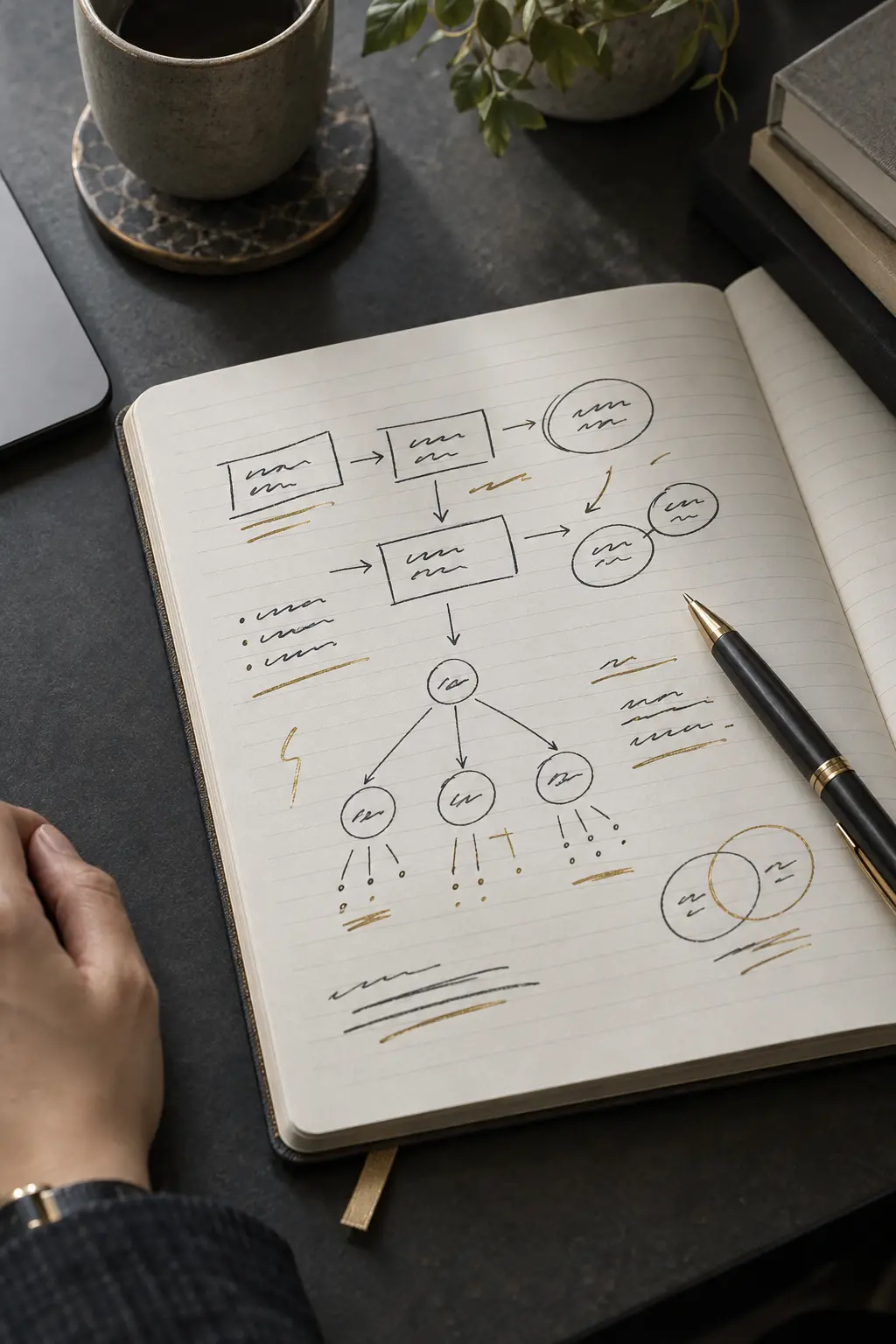
笔记本上手画的方框、箭头和分支图 / A notebook page of hand-drawn boxes, arrows and a branching diagram

第二种方法,我非常推崇的,叫手写稿。就是一张白纸、一支笔,当着客户的面一边讲一边写:保险分哪几类, 定期、终身、万能、IUL 怎么来的,一条线一条线地画出来。

The second method, one I strongly recommend, is the handwritten sketch. A blank page and a pen, and you write as you talk, right in front of the client: what kinds of insurance there are, how term, whole life, universal life and IUL came about, drawn line by line.

手写稿也有四个好处。讲解灵活:可以根据客户的反应灵活调整讲解内容,沟通更自然、更有针对性。 便于临场调整:可以随时补充、修改重点,快速应对客户的疑问和关注点。逻辑推导更直观: 通过手写清晰地展示思路,帮助客户一步步理解,增强信任感。适合个性化沟通:可以根据不同客户的情况量身定制内容, 展示更贴近客户需求的解决方案。

Handwriting has four strengths too. Flexible: you adjust to the client's reactions, so the conversation is natural and on point. Easy to adapt: add or change emphasis at any moment and answer questions and concerns as they come. Clearer logic: writing it out shows your reasoning and lets the client follow step by step, which builds trust. Personal: tailor it to each client's situation and show a solution that fits their needs.

两种怎么选?有些情况用幻灯片,有些情况用手写,根据客户自己判断。喜欢看数据、看图的客户,幻灯片; 需要边聊边理清思路、问题比较多的客户,手写。很多时候两个一起用:先手写把逻辑讲清楚,再翻出幻灯片或计划书看数字。

How to choose? Some situations call for slides, others for handwriting; read the client. Clients who like data and charts: slides. Clients who need to talk it through and have lots of questions: handwriting. Often you'll use both: sketch the logic first, then bring up the slides or the illustration for the numbers.

互动设计Interaction

请一位伙伴上台,用一张纸三分钟手写讲清「定期和终身的区别」,再请大家说说比看幻灯片的感觉有什么不同。

Invite a partner up to explain "term versus permanent" on one sheet of paper in three minutes, then ask the room how it felt compared with slides.

七、资料系统(一):手机相册7. Your Materials (I): Phone Albums

SYSTEM

考考你:10 秒钟之内,找出一张国家人寿和其他公司的对比图Quick test: find a National Life vs. another carrier comparison in ten seconds

1招募Recruiting团队、活动、旅游Team, events, trips
2产品Products对比图、理赔、评级Comparisons, claims, ratings
3资料海报Company / seminars公司资料、讲座海报Background, event posters
4培训幻灯片System / training系统截图、课件Screenshots, decks
5朋友圈素材Post material配图、节日图Images, holiday graphics

最少两个:产品一个、招募一个。截了图不分类,等于没截At minimum two: products and recruiting. A screenshot you don't file is one you don't have

第七件事,销售资料和销售系统。先做一个小测试:在场的伙伴,我需要你在十秒钟之内,找出一张国家人寿跟其他公司的对比图。能找出来吗? 能找出来,说明你已经归类了。如果你还在想「那张图我看过啊,在哪个群里来着」,那你的销售还不及格。

Seven: sales materials and your system. A quick test first: everyone, find me a comparison of National Life with another carrier within ten seconds. Can you? If so, you've already filed it. If you're thinking, "I saw that image, which group chat was it in…", your selling isn't up to standard yet.

客户随时会问:国家人寿历年理赔了多少?这个产品和另一家的区别是什么?你得马上拿出图来。培训里老师讲了一张很好的对比图, 你截图了吗?截了图,你分类保存了吗?不分类,你一定找不到。磨刀不误砍柴工。

Clients will ask at any moment: how much has National Life paid in claims over the years? How does this product differ from another company's? You need the image right away. A trainer showed a great comparison in a session; did you screenshot it? Did you file it? If you don't file it, you'll never find it. Sharpening the axe doesn't delay the woodcutting.

所以手机里最少建两个相册:一个装产品知识,一个装招募的内容,比如我们团队的活动、公司的旅游。做得更细一点,可以像这页分成五个: 招募、产品、公司资料和讲座海报、系统和培训幻灯片、朋友圈素材。

So make at least two albums on your phone: one for product knowledge, one for recruiting, such as team events and company trips. To go further, split into five like this slide: recruiting, products, company material and seminar posters, the system and training slides, and material for your posts.

互动设计Interaction

真的计时十秒,让大家现场找。找到的举手,找不到的今天回去就建相册。

Actually time ten seconds and have everyone search. Hands up if you found it; if not, build your albums tonight.

资料系统(二):备忘录里的文案库Your Materials (II): A Copy Library in Notes

SYSTEM
1

产品文案Product copy

看到写得好的产品文案,存下来Save well-written product posts when you see them

2

招募文案Recruiting copy

发招募信息时,不用从零写Never start a recruiting post from scratch

3

励志文案Inspiration

早上想发一句,现搜搜不到Searching at 7 a.m. never turns up the right line

4

日程计划Schedule

本周的约见、跟进和待办This week's meetings, follow-ups and to-dos

平时存好,用的时候打开就有Save as you go, and it's there when you need it

相册管图片,备忘录管文字。苹果手机叫 Notes,其他手机也都有类似的功能。备忘录里最少存这么几类。

Albums hold images; notes hold words. On an iPhone it's the Notes app, and every phone has something similar. Keep at least these categories.

第一,产品文案。发朋友圈的时候,有时候不知道怎么写。平时看到朋友圈里有人产品文案写得很好,存进备忘录,下回要用的时候就有了。 第二,招募文案,同样的道理。第三,励志文案,早上起来想发一句,现搜怎么也搜不到,平常看到好的提前存起来。 第四,日程计划,这一周约了谁、要跟进谁。

One: product copy. Sometimes you don't know how to word a post. When you see a well-written product post, save it to Notes and it's there next time. Two: recruiting copy, same idea. Three: inspirational lines; searching first thing in the morning never finds the right one, so save good ones when you see them. Four: your schedule, who you're meeting and following up with this week.

磨刀不误砍柴工。资料管理是平时的功夫,用的时候才不慌。

Sharpen the axe first. Managing your materials is everyday work, and it means you're never scrambling when it counts.

讲师提醒Presenter note

存的是别人的写法,发之前改成自己的话;涉及产品和收入的文案先对照合规手册。

What you save is someone else's wording; rewrite it in your own voice before posting, and check anything about products or income against the Compliance Handbook.

案例:每一句话,都有一张图做 back upCase: Every Sentence Backed by an Image

CASE

一位伙伴和客户的微信聊天,节选四段Four excerpts from a partner's chat with a client

「美国人寿保险有五代产品」"U.S. life insurance has five generations"

→ 发一张寿险演进图→ sends the evolution chart

「为什么推荐这家公司」"Why this carrier"

→ 发公司历史和历年理赔图→ sends the company history and claims chart

「外籍人士能不能买」"Can a foreign national buy?"

→ 发外籍人士投保条件图→ sends the eligibility chart

「公司稳不稳」"Is the company sound?"

→ 发评级和公司亮点图→ sends ratings and highlights

再新的经纪人,说的话有图支撑,可信度就高很多However new you are, backing each statement with an image makes you far more credible

看一个真实的案例。这是我们一位伙伴发在群里的一段微信聊天记录,我当时看到就截图存了下来,因为他这一点做得真好。

Here's a real example. A partner of ours shared this chat in the group; I saved a screenshot right away, because they did this so well.

他跟客户说:「美国人寿保险有五代产品。」啪,发一张寿险演进的图。客户说自己最近也在研究 IUL,他介绍国家人寿,啪, 发一张公司历史和历年理赔的图。客户担心 IUL 比较新,十年二十年以后市场怎么样谁也说不好,他就把讲解的重点放在客户关心的稳妥上。 客户问外籍人士能不能买,啪,又发一张外籍人士投保条件的图。最后讲公司评级,再发一张公司亮点的图。

They told the client, "U.S. life insurance has gone through five generations," and sent an evolution chart. The client said they'd been reading up on IUL lately; our partner introduced National Life and sent a chart of the company's history and claims paid. The client worried that IUL is relatively new and nobody can say what markets will do in ten or twenty years, so our partner focused on the stability the client cared about. The client asked whether a foreign national could buy, and got a chart of the eligibility conditions. Finally, on the company's ratings, another image of its highlights.

这段聊天记录好在哪?他的每一句话,都有一张图片做 back up。就算你是一个很新的经纪人也不怕, 只要你说的话都有这些图片支撑,每一句话的可信度就高了很多。没有这些图,你拿什么跟客人讲呢?这就是前面两页讲的相册和备忘录的用处。

What makes this chat so good? Every sentence is backed by an image. Even a very new agent has nothing to fear: when what you say is supported by these images, each sentence becomes much more credible. Without them, what would you show the client? That's exactly what the albums and notes from the last two slides are for.

这些图在网站上都找得到:寿险五次进化、 为什么选择国家人寿、外籍人士投保。

You'll find these images on this site: Evolution of Life Insurance, Why National Life, and Foreign Nationals.

讲师提醒Presenter note

原课放的是聊天截图,这里只写结构,不放截图、不写伙伴名字。发给客户的图要用公司核准、注明来源和日期的资料,销量排名这类数字发之前核对当期出处。

The original session showed chat screenshots; here we keep only the structure, with no screenshots or names. Images sent to clients should be carrier-approved, with source and date; check the current source for sales rankings before using them.

八、目标管理:把每个月的目标写出来8. Goals: Write Down Every Month's Target

GOALS
1

规划你的日历Plan your calendar

每个月的行程、出差、年会和关键节点,先写进日历Put the month's schedule, travel, conventions and deadlines on the calendar first

2

把目标写出来Make goals visible

月目标、周目标、日目标写在白板上,天天看得见Monthly, weekly and daily goals on a whiteboard you see every day

3

设定每月目标Set monthly targets

先选方向:招募,还是产品First choose your direction: recruiting or products

很多人不是没有目标,是缺少提醒Most people don't lack goals; they lack reminders

书房墙上的白板画着月历,贴着便利贴 / A home-office whiteboard with a monthly calendar and sticky notes

第八件事,也是最后一件:销售目标与时间管理。做销售,一定要管好你的目标,管好你的时间。

Eight, the last: sales goals and time management. In sales you have to manage both your targets and your time.

我推荐每一位伙伴都买一块白板。家里还没有白板,怎么做销售?白板上第一样东西是日历: 你每个月的行程、出差、年会、重要日期,这个月有什么事,先写上去。第二样是目标。很多人不是没有目标,是缺少提醒。 天天看你的白板,就知道你的目标是什么,你得天天提醒自己。月目标、周目标、日目标都写上。

I recommend every partner buy a whiteboard. No whiteboard at home? Then how are you selling? The first thing on it is a calendar: the month's schedule, trips, conventions, key dates, everything happening this month. The second is your goals. Most people don't lack goals; they lack reminders. Look at the whiteboard every day and you'll know what you're aiming for; you have to remind yourself daily. Write the monthly, weekly and daily goals.

第三步,设定每个月的目标。大目标是由小目标组成的,每个月的目标很重要。设定之前,先要想清楚一个问题:你走哪个方向?下一页讲。

Step three: set the monthly targets. Big goals are made of small ones, so each month's target matters. Before setting it, answer one question: which direction are you going? That's the next slide.

两个方向,两种月目标Two Directions, Two Monthly Targets

GOALS

A. 招募方向 RecruiterA. Recruiter

每月目标:招募 3 人Monthly target: 3 recruits

伙伴的单不管和谁一起开,都在你的团队里Whoever your recruits work cases with, the business stays in your team

B. 产品方向 CFTB. CFT (product)

第一档:交单 15,000 点 / 批单 10,000 点Tier 1: 15,000 submitted / 10,000 paid
利润分红 Profit Sharing 个人门槛The personal Profit Sharing threshold

第二档:交单 25,000 点 / 批单 20,000 点Tier 2: 25,000 submitted / 20,000 paid
个人月奖金池门槛(+3 张 IUL)Personal Bonus Pool threshold (+3 IUL cases)

两个都做到,每月 3 人 + 25,000 点,课上叫「3-2-5」Do both, 3 recruits plus 25,000 points a month, and that's the "3-2-5"

作为经纪人,有两个方向:走招募的方向,还是走产品的方向?先想清楚自己是哪一种人。

As an agent you have two directions: recruiting or products. First decide which kind of person you are.

招募方向:你的目标是每个月招三个人。记住一句话:当你选好一条路之后,不要在乎另一条路上的人怎么说。 你选了招募,有人会说「你都不懂产品,就只会招募」。说这话的人,往往自己产品也没做明白。很多人不是不会招募,是太在乎另一条路上的人怎么评价自己。 你要建团队,就可以把产品特别强的人招进来,做团队的产品培训师。

Recruiting: your target is three recruits a month. Remember: once you've chosen your road, don't worry about what people on the other road say. Choose recruiting and someone will say, "You don't even know the products; all you can do is recruit." Often that person hasn't mastered the products either. Many people can recruit perfectly well; they just care too much about how people on the other path judge them. If you're building a team, you can bring in people who are strong on product to be the team's product trainers.

走招募的伙伴还常有一个顾虑:「我招来的人,他不跟我开单,跟别人开单。」想清楚:人还是你团队的人,他的单不管和谁一起开,都是你团队的业绩, 还有人帮你带他。继续招人就是了。

Recruiters often worry: "The person I recruited is doing cases with someone else, not me." Think it through: they're still on your team, their business counts toward your team whoever they work it with, and someone else is helping develop them. Just keep recruiting.

产品方向:不擅长招募,但擅长学习产品、研究产品。你的目标不是每个月招三个人,而是每个月最少交单 15,000 点, 因为交单 15,000 点,才能做到批单 10,000 点,达到利润分红的个人门槛。再往上一档,每个月交单 25,000 点、批单 20,000 点, 达到个人月奖金池的门槛(另外要 3 张 IUL,详见《四种收入》)。交单和批单之间差的那一截,是核保、补件、客户改主意,所以交单目标要定得比批单高。

Products: recruiting isn't your strength, but learning and researching products is. Your target isn't three recruits a month; it's at least 15,000 points submitted a month, because that's what it takes to get 10,000 points paid and reach the personal Profit Sharing threshold. One tier up, 25,000 submitted and 20,000 paid each month reaches the Personal Bonus Pool threshold (which also requires 3 IUL cases; see Four Incomes). The gap between submitted and paid comes from underwriting, missing requirements and clients changing their minds, so set the submitted target higher than the paid one.

两个都能做的,我们叫「3-2-5」:每个月招三个人,再交单两万五。但刚开始的新伙伴,不要求两个都强:要么三个人,要么一万五。 如果两个都没有,招募也没做、卖单也没做,那就要停下来看看问题出在哪。

If you can do both, we call it "3-2-5": three recruits and 25,000 points every month. New partners don't need to be strong at both: either three recruits or 15,000 points. If it's neither, no recruiting and no sales, stop and work out where the problem is.

制度算例:每周 4 个约见,一年是多少An Illustration: Four Meetings a Week, Over a Year

MATH
1每周 4 个4 a week每月约 17 个,一年约 204 个≈17 a month, ≈204 meetings a year
2成交 30%30% close204 × 30% ≈ 61 张204 × 30% ≈ 61 cases
3每张 3,000 点3,000 pts each61 × 3,000 = 183,000 点61 × 3,000 = 183,000 pts
460% 佣金60% rate183,000 × 60% = $109,800183,000 × 60% = $109,800

难的不是每周 4 个,是每一周都做 4 个The hard part isn't four a week; it's four every single week

制度算例,不是收入承诺。成交率、每张点数、佣金比例都是假设,因人而异;新人起步比例是 45%,按 45% 算是 $82,350。An illustration, not a promise of income. Close rate, points per case and commission rate are assumptions and vary by person; new agents start at 45%, which gives $82,350.

接下来我们算一笔账。这是一个制度算例,用来理解「量」和「结果」的关系,不是收入承诺。

Now let's do some arithmetic. This is a compensation-plan illustration to show how activity and results relate. It isn't a promise of income.

假设你的佣金比例是 60%,每张单只算 3,000 点,不算 6,000、10,000 的大单;成交率只算 30%,见三个人成交一个,另外两个都黄了。 你每周做四个约见,注意,不是每天四个,是每周四个。一个月大约 17 个,一年大约 204 个。

Assume a 60% commission rate and only 3,000 points per case, not the 6,000 or 10,000-point cases; assume a 30% close rate, one in three, with the other two falling through. You hold four appointments a week. Note: not four a day, four a week. That's about 17 a month and about 204 a year.

204 个约见乘以 30%,大约成交 61 张;61 张乘以 3,000 点,是 183,000 点;183,000 点乘以 60%,是 $109,800,大约十万出头。 新人刚开始的比例是 45%,同样的量按 45% 算是 $82,350。

204 appointments at 30% is about 61 cases; 61 cases at 3,000 points is 183,000 points; 183,000 points at 60% is $109,800, a little over a hundred thousand. New agents start at 45%; the same activity at 45% comes to $82,350.

难在哪?每周做四个不难,在场每一位都做得到。难的是第一周做了四个,第二周还能不能做四个。我见过有的伙伴,一周做了四个,四个全黄了, 就说「这事太难了,保险做不了」。他的样本量只有四个。

Where's the difficulty? Four a week isn't hard; everyone here can do it. The hard part is doing four in week one and then four again in week two. I've seen partners do four in a week, have all four fall through, and conclude, "This is too hard, insurance doesn't work." Their sample size was four.

合规提醒Compliance

这一页只在内部培训里讲,招募谈话里不要用「一年十万很简单」这类说法。金额以团队正式资料为准。

This slide is for internal training only. Never use lines like "a hundred thousand a year is easy" in recruiting conversations. Amounts follow the team's official material.

样本量放到 200,再下判断Get to 200 Before You Judge

MINDSET
≈$538每一个约见Per appointment$109,800 ÷ 204,成不成交都算$109,800 ÷ 204, sale or not
≈$54每一条邀约私信Per invitation sent假设 10 条约出 1 个Assuming 1 in 10 becomes a meeting

打工思维Employee mindset

干一小时,今天就要结账Work an hour, get paid today

老板思维Owner mindset

先投入,后算账Invest first, count later

所以我对每一位伙伴说:在你判断这个事业能不能做成之前,先把你的样本量放到 200 个。 这 200 个,有的伙伴一年做完,有的伙伴五年才做完。在做到 200 个之前,别管你是失败了 4 个、8 个还是 14 个,先别下结论。

So I tell every partner: before you decide whether this business can work for you, get your sample size to 200. Some partners get there in a year, some take five. Until you reach 200, whether four, eight or fourteen fell through, don't draw conclusions.

再把这个算例倒过来看。一年 204 个约见对应 $109,800,平均下来,每做一个约见大约值 $538,不管这一个成没成交。 约见从哪来?从邀约来。假设你发十条私信,只有一个人出来见面,那每发一条私信大约值 $54。不管对方回不回、约没约上, 你只要发出去,就在往这个数字上走。当然,这笔钱不会当场到你口袋里,要等一整年的 200 个约见都做完,它才算出来。

Now flip the illustration around. 204 appointments correspond to $109,800, so on average each appointment is worth about $538, whether or not that one closes. Where do appointments come from? Invitations. If one in ten messages leads to a meeting, each message you send is worth about $54. Whether they reply or book, every message moves you toward that number. Of course, the money doesn't land in your pocket on the spot; it only adds up once the whole year's 200 appointments are done.

这就是打工思维和老板思维的区别。打工思维是:今天在餐厅干一小时,老板必须给我 15 块、20 块,今天干完今天结账。 老板思维是先投入、后算账。在美国开过餐馆的都知道,一家餐厅一般要一年半、两年才回本,第三年、第四年才开始赚钱。我们做的是一样的事情: 不是一付出就有结果,是从邀约开始,从一对一的约见开始,约见做够了,结果才出来。

That's the difference between an employee mindset and an owner mindset. The employee mindset says: I worked an hour at the restaurant, so the boss owes me $15 or $20, and I get paid today. The owner mindset invests first and counts later. Anyone who's run a restaurant in the US knows it usually takes a year and a half to two years to earn back the investment, and the profit comes in years three and four. Our work is the same: effort doesn't pay off immediately. It starts with invitations and one-on-one meetings, and when you've held enough meetings, the results come.

约从哪里找?如果你有团队,让团队伙伴把人约给你,你帮他谈;你不催伙伴、不帮他解决问题,他怎么约人?如果你是刚开始的新人, 就主动发私信、发朋友圈,不要守株待兔。

Where do the appointments come from? If you have a team, have your partners book people and you help them run the meeting; if you don't push them or help solve their problems, how will they book anyone? If you're just starting, send messages and post actively. Don't sit and wait for business to walk in.

合规提醒Compliance

$538、$54 都是从上一页的假设倒推出来的平均数,用来说明「先投入后算账」,不代表任何人一定能拿到。

$538 and $54 are averages derived from the previous slide's assumptions, to illustrate investing first. They don't mean anyone will necessarily earn them.

下一部:销售技巧Next: Sales Techniques

NEXT

第一部(今天)Part one (today)

专业形象与客户信任:见面前、见面时、每个月Image and trust: before, during, and every month

第二部Part two

所有的销售技巧:开场、提问、异议、促成All the techniques: opening, questions, objections, closing

回去先做三件事:建两个相册、买一块白板、写下这个月的目标Three things tonight: make two albums, buy a whiteboard, write down this month's target

今天这一堂是销售三部曲的第一部。我们没有讲任何销售技巧,所有的技巧都在第二部。今天讲的,是建立专业形象和客户信任。

Today was part one of the sales series. We covered no techniques; they're all in part two. Today was about building a professional image and the client's trust.

回去先做三件事:手机里建好两个相册,一个产品、一个招募;买一块白板,挂在每天看得见的地方;把这个月的目标写上去, 招募方向写三个人,产品方向写一万五千点。

Do three things tonight: make two albums on your phone, one for products and one for recruiting; buy a whiteboard and hang it where you'll see it every day; and write this month's target on it, three recruits if you're recruiting, 15,000 points if you're on products.

最后再说一遍封面那句话:客户不信任你,再好的技巧都没用;客户信任你,笨拙的技巧照样能成交。 想学怎么约人、坐下来以后讲什么,接着看从破冰到邀约和八种切入点。

One last time, the line from the cover: without the client's trust, the best technique fails; with it, even clumsy technique closes. For how to book people and what to say once you sit down, continue with Breaking the Ice and Eight Ways In.

这一课讲什么What this session covers

销售三部曲的第一部:建立专业形象和客户信任,不讲成交技巧(技巧在第二部)。一共八件事:专业形象、销售工具、客户预约、 见面地点、见面礼仪、专业展示、资料系统、目标管理。原课录音从第四点中途开始,第一到第三点是按课程最后的回顾补写的大意。案例都已匿名。

Part one of a three-part sales series: building a professional image and the client's trust, with no closing techniques (those are part two). Eight things: image, tools, booking, location, etiquette, presenting, materials, and goals. The original recording begins partway through point four; points one to three are reconstructed from the session's closing recap. All cases are anonymized.

一、专业形象1. Your professional image

客户还没见到你,就已经在判断你:看过你的朋友圈,听介绍人说过你,见面那一刻再看你的穿着和状态。

Clients judge you before they meet you: from your social feed, from what the person who introduced you said, and in the first moment, from how you look and carry yourself.

二、销售工具2. Your tools

出门前花两分钟检查:电脑或平板充满电,要讲的幻灯片和计划书先下载到本地;纸和笔(手写讲解、记客户的问题); 第二次见面带计划书打印件,客户可以留着和家人一起看;手机里分好类的相册(见第七节);可能用到的申请表、需求分析表;名片、充电线;还有自己的一瓶水(见第四节)。

Spend two minutes checking before you leave: a charged laptop or tablet with slides and illustrations downloaded; paper and a pen for sketching and noting questions; printed illustrations at the second meeting for the client to keep and share with family; sorted photo albums on your phone (section 7); any applications or fact finders you may need; business cards and a charger; and your own bottle of water (section 4).

三、客户预约3. Booking the meeting

约的时候就把四件事说清楚:

Settle four things when you book:

  1. 时间和时长:「周六上午 10 点,大概一个半小时,你时间 OK 吗?」说了时长,客户好安排,你也给自己定了边界。
  2. Time and length: "Saturday at 10, about an hour and a half. Does that work?" Naming the length lets the client plan and sets a boundary for you.
  3. 地点:按客户方便来选(见下一节);去客户家,提前问清停车和门禁。
  4. Place: chosen for the client's convenience (next section); for a home visit, ask about parking and gates.
  5. 谁一起来:家庭的决定,请夫妻两个人都在,不然要讲两遍。
  6. Who's coming: a family decision needs both spouses, or you'll present twice.
  7. 前一天确认:发一条简短的信息,顺便说要准备什么,比如现有保单、体检报告。
  8. Confirm the day before: a short message, mentioning what to have ready, such as existing policies or a recent medical report.

四、见面地点与拜访客户家4. Where to meet, and visiting a client's home

合适的见面地点,取决于客户的需求,而不是销售人员的习惯。

The right place depends on what the client needs, not on the salesperson's habits.

地点Place核心优势Key advantage适合什么人Best for
咖啡厅Coffee shop第一次见面轻松认识,降低客户防备心理A relaxed first meeting that lowers the client's guard第一次见面的客户;网上认识的陌生客户;还在观望、暂时不想有太大压力的潜在客户First meetings; people met online; prospects still looking who want little pressure
酒店大堂Hotel lobby保持商务专业感,又避免办公室带来的压力Businesslike without the pressure of an office外地出差开发市场时约见的客户;离你办公室远但离酒店较近的客户;偏好中立商务环境的客户Clients met while travelling to a new market; those far from your office but near a hotel; those who prefer neutral ground
我们的办公室Our office从初步了解进入真正的方案讨论,方便讲解产品和数字From getting acquainted to real planning; easy to walk through products and numbers已经在咖啡厅或酒店大堂见过、需要第二次深入见面的客户;朋友转介绍的客户;已经明确表示有兴趣、愿意认真了解产品的客户A deeper second meeting after a café or lobby; referrals; clients who've said they're interested and want to understand the product
客户家里Client's home需要家庭共同参与或出门不方便时,上门拜访更贴心Considerate when the family takes part or going out is hard主动邀请你去家里的客户;年长、不方便开车出门的客户;家里有年幼孩子、外出不方便的客户Clients who invite you; older clients who don't drive easily; families with young children
客户公司Client's office对时间宝贵、很难抽身的客户,主动配合更有效率Going to busy clients is more efficient公司老板或专业人士;工作安排紧凑、很难离开办公室的客户;有独立办公室或私人会议空间的客户Owners and professionals; people who can't easily leave work; those with a private office or meeting room

去客户家拜访,真正的专业往往体现在七个细节里:

At a client's home, professionalism shows in seven details:

  1. 提前到附近,但不要太早出现在门口。约 9 点,8 点 45 到附近,但不要 8 点 45 就站在门口,客户可能还在收拾。
  2. Arrive early and wait nearby, but don't appear at the door too soon. For 9:00, be in the area by 8:45, but not on the doorstep at 8:45; they may still be getting ready.
  3. 接近约定时间,再把车开到门前。先停在同一条街上、离他家五六个房子的地方,临近时间再开过去。
  4. Pull up close to the time. Wait on the same street, five or six houses away, then drive up just before.
  5. 不要停在客户家车道上,也不要挡住出入。停在门口路边。有伙伴准点到了、停在车道上,讲到一半客户的儿子要开车出门,只好出去移车再移回来,节奏全断,这一单又要重来。
  6. Never park in the driveway or block anyone in. Use the curb. One partner arrived on time and parked in the driveway; halfway through, the client's son needed to drive out, so they had to move the car and move it back. The momentum was gone and the sale had to start over.
  7. 尊重客户家的脱鞋习惯。穿干净的深色袜子,或自己带鞋套。袜子上有洞,专业度一下就没了。
  8. Respect the shoe custom. Wear clean dark socks or bring shoe covers. Socks with holes undo your professionalism instantly.
  9. 自备矿泉水,避免临时尴尬。有伙伴喝了客户热情端上的一大杯凉茶,一个半小时后不得不中途去洗手间,回来气氛全变。客户请喝东西,喝一口无妨,可以说「谢谢,特别好喝,我肠胃不太好,自己带了水」。
  10. Bring your own water. A partner drank a big glass of herbal tea a warm host served, and ninety minutes in had to excuse themselves to the bathroom; when they came back the mood had changed. A sip of what's offered is fine; you can say, "Thank you, it's lovely. My stomach is a bit sensitive, so I brought water."
  11. 手机调成静音,减少打扰。有伙伴去车行买车,销售聊到一半接起私人电话寒暄,还说「我这儿有个 VIP 客户」,那一单不可能成了。在客户家的两个小时,他就是你心里唯一的 VIP。
  12. Phone on silent. A partner shopping for a car watched the salesperson take a personal call mid-conversation, even saying "I've got a VIP client here." That sale was over. For those two hours, the client is your only VIP.
  13. 进门后不要乱走乱看,等客户安排座位。客户说「第一次来,我带你转转」,就大方地转,顺便了解这个家;客户没邀请,就不要多看。
  14. Don't wander; wait to be seated. If the client offers a tour on your first visit, accept graciously and get to know the household; if not, don't look around.

五、见面礼仪5. Meeting etiquette

  1. 前 30 秒决定第一印象。见一个人,前 30 秒就有了喜不喜欢的感觉;语言听不全的时候,人更依赖表情和语气。 迪士尼的每一位员工都经过训练,对客人热情、微笑、尊重。我们见客户也一样:微笑,热情,对家里每一个人都尊重。
  2. The first 30 seconds set the impression. Within half a minute we know whether we like someone; when the language doesn't fully land, we lean on expression and tone. Every Disneyland cast member is trained to be warm, smiling and respectful. Do the same with clients: smile, be warm, and respect everyone in the home.
  3. 座位。先安排客户:让他面对安静的一面,不要面对车水马龙的窗户,不然一会就走神。再安排自己:不要面对面坐,那像原告和被告、像辩论赛; 坐在客户旁边。右手写字的话,让客户坐在你左边,你的手臂才不会挡住纸和屏幕;电脑放在两人中间,一起看。但别靠得太近。
  4. Seating. Seat the client first, facing something calm rather than a busy window, or they'll drift. Then yourself: not face to face, which looks like a courtroom or a debate, but beside the client. If you write right-handed, keep the client on your left so your arm doesn't block the page or screen, and put the laptop between you. Just not too close.
  5. 手机。静音,开单的一两个小时别经常看手机,对方会觉得你不耐烦。
  6. Your phone. Silent, and don't keep checking it during the meeting; it reads as impatience.
  7. 身体距离与个人空间。不太远也不太近,别随意触碰客户或他的东西。在美国尤其讲究分寸感。
  8. Distance and personal space. Not too far or too close; don't touch the client or their belongings. In the US people especially expect that sense of boundaries.
  9. 尊重客户时间。说好一个半小时,到了时间聊得正好、客户也没要走,可以问「能不能再讲 15 分钟,你时间 OK 吗?」 最怕说好一个半小时讲了三个小时,耽误了客户后面的安排。客户多半不会说出来,只是第二次约不出来了。
  10. Respect their time. If you said ninety minutes and it's going well with no sign of leaving, ask, "Could we take fifteen more minutes? Does that work for you?" The worst case is ninety minutes stretching to three hours and wrecking the client's plans. Most won't say so; you just won't get a second meeting.

六、专业展示:幻灯片还是手写稿6. Presenting: slides or handwriting

找到适合自己、也适合这位客户的表达方式。

Find the style that suits you and this particular client.

幻灯片:一套讲产品的幻灯片,比如美国寿险介绍 → 公司背景 → 主要产品特点 → 税务优惠 → 回报数据对比 → 实际案例演示。 好处是结构清晰、便于对比、专业的视觉辅助,适合讲产品和数字(现金价值、回报率)。喜欢看数据、看图的客户,用幻灯片效果最好。 给客户看的回报数据只用公司核准的计划书和官方资料,演示利率不是保证。

Slides: a product deck, for example U.S. life insurance overview → company background → key product features → tax advantages → illustrated values compared → a real case. Strengths: clear structure, easy comparison, professional visual support, and they suit products and numbers (cash values, rates). Best for clients who like data and charts. Show clients only carrier-approved illustrations and official material; illustrated rates aren't guaranteed.

手写稿:一张纸、一支笔,一边讲一边画。好处是讲解灵活(看客户反应调整)、便于临场调整(随时补充、改重点)、 逻辑推导更直观(一步步写出来,客户跟着理解,增强信任)、适合个性化沟通(按客户的情况量身定制)。需要边聊边理清思路、问题比较多的客户,用手写。

Handwriting: a sheet of paper and a pen, drawing as you talk. Strengths: flexible (adjust to the client's reactions), easy to adapt (add or shift emphasis any time), clearer logic (written step by step so the client follows and trusts it), and personal (tailored to this client). Best for clients who need to talk it through and have lots of questions.

两种常常一起用:先手写把逻辑讲清楚,再翻出幻灯片或计划书看数字。

The two often go together: sketch the logic first, then bring up the slides or illustration for the numbers.

七、销售资料与系统7. Sales materials and your system

测试一下:十秒钟之内,能不能在手机里找出一张国家人寿和其他公司的对比图?找得出来,说明你已经归类了;还在想「在哪个群里看过」,就还不及格。 培训里看到好的图,截了图不分类,等于没截。

A test: can you find a National Life comparison with another carrier on your phone in ten seconds? If so, you've filed it; if you're thinking "which group chat was that in," you're not there yet. A screenshot you don't file is one you don't have.

一位伙伴和客户的微信聊天就是好例子:讲到寿险有五代产品,发一张演进图;介绍公司,发公司历史和理赔图;客户问外籍人士能不能买,发投保条件图; 讲评级,发公司亮点图。每一句话都有一张图做 back up,再新的经纪人,说话的可信度也高很多。这些图在网站上都有: 寿险五次进化、为什么选择国家人寿、 外籍人士投保。发给客户的图用公司核准、注明来源和日期的资料。

One partner's chat with a client shows how: on the five generations of life insurance, an evolution chart; on the company, its history and claims; asked whether a foreign national could buy, the eligibility chart; on ratings, the company highlights. Every sentence backed by an image makes even a new agent far more credible. The images are on this site: Evolution of Life Insurance, Why National Life, and Foreign Nationals. Send clients only carrier-approved images with source and date.

八、销售目标与时间管理8. Sales goals and time management

买一块白板。第一样写日历:每个月的行程、出差、年会和关键节点。第二样写目标:月目标、周目标、日目标,天天看得见。 很多人不是没有目标,是缺少提醒。第三步,设定每月目标,先选方向:

Buy a whiteboard. First put up the calendar: the month's schedule, travel, conventions and key dates. Then your goals, monthly, weekly and daily, where you see them every day. Most people don't lack goals; they lack reminders. Step three, set monthly targets, starting with your direction:

方向Direction每月目标Monthly target对应Why
招募 RecruiterRecruiter招募 3 人3 recruits建团队Building a team
产品 CFT · 第一档Product (CFT), tier 1交单 15,000 点 / 批单 10,000 点15,000 submitted / 10,000 paid利润分红 Profit Sharing 个人门槛Personal Profit Sharing threshold
产品 CFT · 第二档Product (CFT), tier 2交单 25,000 点 / 批单 20,000 点25,000 submitted / 20,000 paid个人月奖金池 Personal Bonus Pool 门槛(另需 3 张 IUL)Personal Bonus Pool threshold (plus 3 IUL cases)

交单目标定得比批单高,是因为核保、补件、客户改主意都会让一部分单批不下来。门槛的细节见《四种收入》,以 PFA 当期公布的规则为准。 两个方向都做到(每月 3 人 + 25,000 点),课上叫「3-2-5」;新伙伴不要求两个都强,但至少要做到一个,两个都没有就要停下来找原因。

The submitted target is higher than paid because underwriting, missing requirements and clients changing their minds keep some cases from being paid. Threshold details are in Four Incomes; PFA's current published rules govern. Doing both (3 recruits plus 25,000 points a month) is the "3-2-5." New partners needn't be strong at both, but should hit one; if it's neither, stop and find out why.

选好一条路,就不要在乎另一条路上的人怎么说。走招募的人常被说「不懂产品」,其实你可以把产品强的人招进团队做产品培训师。 你招来的伙伴不管和谁一起开单,都还是你团队的业绩,继续招人就是了。

Once you've chosen your road, ignore what people on the other road say. Recruiters hear "you don't know the products," but you can bring product-strong people onto the team as product trainers. Whoever your recruits work cases with, the business is still your team's; keep recruiting.

一个制度算例:量和结果的关系An illustration: activity and results

以下是制度算例,不是收入承诺,成交率、点数、比例都是假设,因人而异。

The following is an illustration of the compensation plan, not a promise of income; the close rate, points and rate are assumptions and vary by person.

假设Assumption算式Math结果Result
每周 4 个约见4 appointments a week每月约 17 个 × 12≈17 a month × 12约 204 个 / 年≈204 a year
成交率 30%30% close rate204 × 30%约 61 张≈61 cases
每张 3,000 点3,000 points each61 × 3,000183,000 点183,000 points
佣金比例 60%60% commission183,000 × 60%$109,800
(新人起步 45%)(new agents start at 45%)183,000 × 45%$82,350
平均每个约见Per appointment$109,800 ÷ 204约 $538≈$538
平均每条邀约私信(10 条约出 1 个)Per invitation (1 in 10 books)$538 ÷ 10约 $54≈$54

这个算例想说的不是金额,而是三件事:

The point of the illustration isn't the dollar amount but three things:

约从哪来?有团队的,让伙伴把人约给你、你帮他谈;刚开始的,主动发私信、发朋友圈,不要守株待兔。 招募谈话里不要用「一年十万很简单」这类说法。

Where do appointments come from? With a team, partners book people and you help run the meetings; starting out, send messages and post actively rather than waiting. Never use lines like "a hundred thousand a year is easy" when recruiting.

课后作业Homework

手机里建好产品、招募两个相册,把这几天培训里截的图分进去;买一块白板,写上这个月的日历和目标。 下一部讲销售技巧,接着看从破冰到邀约和八种切入点。

Make two albums on your phone, products and recruiting, and file this week's training screenshots; buy a whiteboard and put up this month's calendar and target. Part two covers techniques; meanwhile read Breaking the Ice and Eight Ways In.

上一篇Previous 从破冰到邀约Breaking the Ice 下一篇Next 八种切入点Eight Ways In

内部培训资料,仅供签约经纪人使用,不可转发给客户。案例已匿名,个案不代表其他客户会有同样的结果。 文中的收入数字一律是制度算例,基于假设的成交率、点数和佣金比例,不是收入承诺;招募谈话中不得承诺收入,制度与门槛以 PFA 当期公布的规则和团队正式资料为准。 产品、税务、法律问题请交给持照的专业人士,本页不构成投资、税务或法律建议。

Internal training material for contracted agents; not for forwarding to clients. Cases are anonymized; one case doesn't predict another client's outcome. All income figures are compensation-plan illustrations based on assumed close rates, points and commission rates, not promises of income; no income may be promised in recruiting conversations, and the plan and thresholds follow PFA's current published rules and the team's official material. Refer product, tax and legal questions to licensed professionals; nothing here is investment, tax or legal advice.